07 3882 4849
07 3882 4849
 Wisdom Teeth Removal
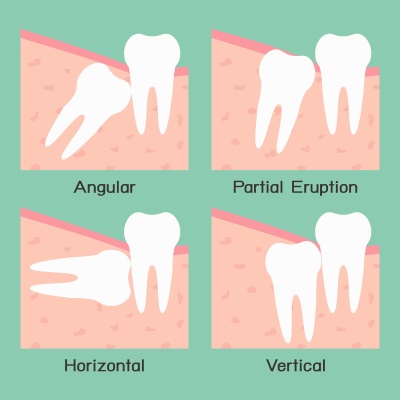
WISDOM TEETH are usually the last teeth to erupt in the mouth and are also referred to as "third molars". They ideally erupt in late teens or early twenties, and hence the name. Many a times, during the eruption, it could cause infection in the gum called "pericoronitis". This gets resolved once the wisdom tooth grows out of the gum completely. The infection may require the need of antibiotics, anti-inflammatory or local application of anaesthetic gels. It is not uncommon to have wisdom teeth missing completely, but usually, most people have four wisdom teeth altogether. At times, the lack of space, or the position and angulation of the wisdom tooth, prevents the complete eruption of the tooth. This is termed as "impacted wisdom tooth".
It is very rare, that an impacted wisdom tooth would cause no trouble. They usuallly cause discomfort, pain, decay and resorption of adjacent tooth. It could also exert pressure on the adjoining teeth and cause crowding.
Removal of a wisdom tooth is a very common procedure and should rather be done before it is a cause of concern. Extraction of impacted wisdom teeth is often a minor surgical procedure. Depending on its extent of impaction, and its approximation to vital structures like nerves; you may be referred to an oral surgeon. It is very common to have all four wisdom teeth removed in a single sitting expecially under general or conscious sedation.